| ||
| ||
|
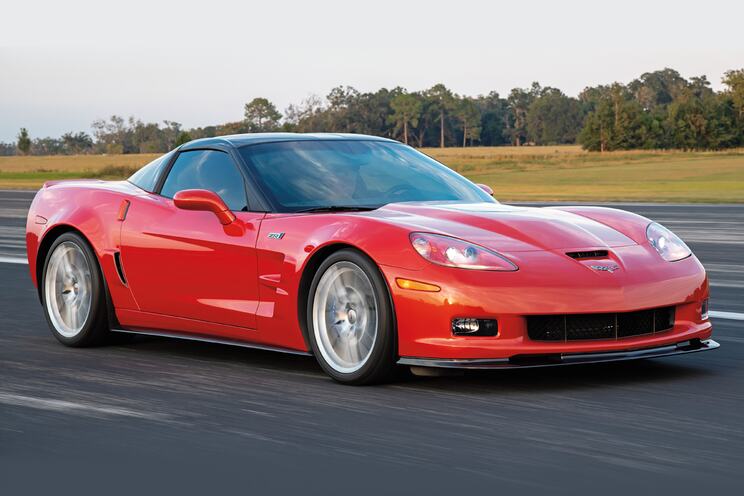
Turbochargers radiate massive amounts of heat. The tight confines of a C6’s engine compartment exasperate this problem, potentially shortening the life of just about every electronic, plastic and rubber component under the hood. Generally, the fix for this is the use of exotic metal shielding, layers of stick-on heat barriers and a vented hood. Usually, however, this turns out to be a Band-Aid fix at best. To find a more permanent solution to the heat issue, Scheid consulted Squires Turbo Systems in Orem, Utah for one of the company’s unique remote-mounted turbo setups. The STS system places the turbochargers well back in the exhaust stream, often right at the tailpipe. If the idea of turbos mounted several feet from the engine sounds strange, it is not a new idea. The P47 Thunderbolt, one of the best fighter aircraft of World War II, had its large turbocharger mounted in the tail. For the C6 application, STS utilizes a pair of small, low-inertia turbochargers mounted at the back of the car, driving them through the stainless-steel headers, high-flow cats and a Corsa X-pipe. The boost is then carried forward through pipes carefully sized to promote velocity and pressure. Up front, there is a large intercooler, which can be chilled even further by a carbon-dioxide spray fed by two five-pound tanks behind the rear seats. A Tial blow-off valve handles pressure surges between gear changes, keeping the turbos spooled and on boost. The system can produce nearly 19 psi of manifold pressure at full boost, which works out to about 1,000 horsepower and over 900 lbs-ft of torque. With the turbos mounted at the far aft end of the C6, there is no room for mufflers, which gives the Fidanza show car a serious sonic presence. Tying all of the underhood hardware together is an HP Systems piggyback engine-management unit with a handbrake-mounted controller. Using the controller, the driver can adjust how much power the Corvette produces—though Fidanza will unleash the full 1,000 bhp for demonstrations, the car is usually dialed back to about 750 for street use. Joining the enhanced engine is a host of chassis upgrades, anchored by a KW Variant III coil-over suspension system. The racing-style KW dampers feature separate compression and rebound adjustments, external reservoirs and adjustable ride height. Rounding out the underpinnings are a set of DPE wheels, Stainless Steel Brakes six-piston calipers and Goodyear EMT tires. Though stickier rubber was available, Fidanza elected to use the Goodyear run-flats due to the car’s planned heavy street use.
On the rare occasions that I’ve been allowed to drive a show car, the experience has often been disappointing. Chassis can be under-developed, and powerplants not fully tuned. The level of fit and finish usually doesn’t come close to production standards, and flashy bits that look good on a show stand are typically impractical on the open road. | |
|
| ||