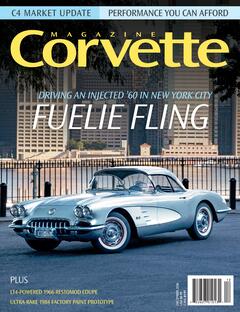

Jan Hyde was an impressionable, car-loving teenager when the Corvette was introduced in 1953, and like so many others who were smitten by its curvaceous lines and promise of carefree, open-air performance, he vowed to someday own one. That someday came in August 1962, when a college fraternity brother steered him to a gently used, Roman Red ’59 roadster at the fabled Malcolm Konner Chevrolet in Paramus, New Jersey.
Hyde thoroughly enjoyed the car, which was powered by a dual-quad, 283-cubic-inch, 245-horsepower engine coupled with a four-speed manual gearbox, and even managed to hold on to it during his post-college service in the United States Army. When Hyde mustered out and landed a job in San Francisco, the Corvette crossed the country with him. It continued to provide both emotional gratification and reliable transportation until he discovered it missing, stolen off the street one morning in early 1964.
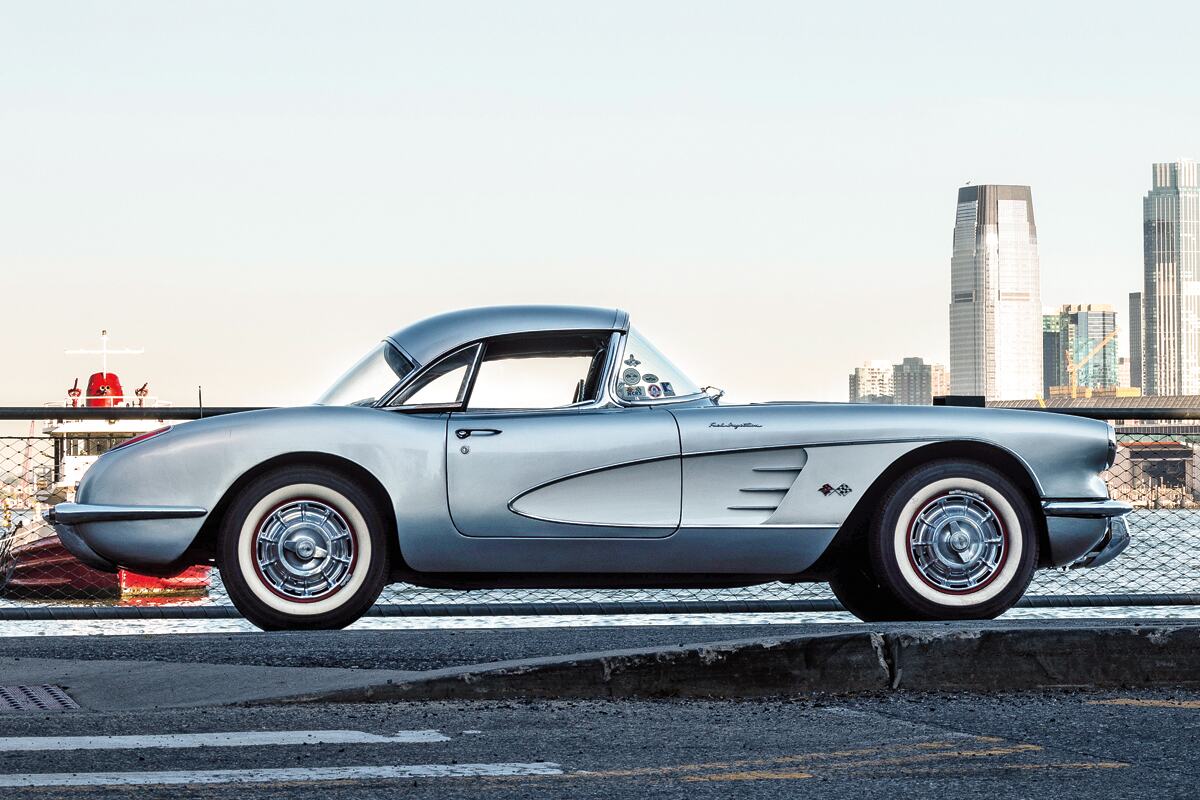
Distressed but not defeated, Hyde immediate set out to find another Corvette. “I preferred the pre-1961 styling,” he says, “and it had to be a Fuelie, there was no doubt about it.” One fateful Saturday night, while on his way home after a date, he spied a Sateen Silver ’60 model at a used-car lot on Broadway in Oakland, California. “I got over there bright and early the next day to look it over,” he says. “The car had a newer-model expansion tank and a repair…from a hit to the right front, but everything else seemed correct.”
Hyde gladly agreed to pay the asking price of $2,400, and he and the dealer toasted their mutually satisfying arrangement with whiskey sourced from a desk drawer and poured into paper cups. This was an era when resources to trace the authenticity of a Corvette after it left the St. Louis factory were virtually nonexistent, so the apparent “correctness” of this one was especially fortuitous.
One of Hyde’s first road trips in the ’60 was to Laguna Seca Raceway, located about 80 miles south of San Francisco on the Monterey Peninsula, where the legendary Jim Hall debuted his wild Chaparral 2 racecar. “The Chaparral 2 had a mysterious hydraulic torque converter that sounded different from a conventional mechanical clutch,” recalls Hyde. “It was essentially a beefed-up version of an automatic transmission, in this instance manufactured by GM.”
Innovations such as front air dams, rear spoilers, and other aerodynamics later seen on production Corvettes were products of Hall’s secret R&D proving ground for GM, based at his shop in Midland, Texas, and tested on his private track, known as Rattlesnake Raceway.
An opportunity to attend Harvard Business School starting September 1964 took Hyde back east to Boston. Before driving his Corvette back across America, he got some sage advice from a man named Ernie Grabstein, who was the service manager at San Francisco’s Ellis Brooks Chevrolet. “He handed me a spare cranking-signal device and said, ‘This little gadget might come in handy if you find yourself stuck out there in some place like Kansas.’”
Back in Boston Hyde was quick to join Corvettes of Massachusetts, a club that gathered on Tuesday evenings every month at Porter Chevrolet in Cambridge. What impressed him most was the number of racers in the group.
In 1966 another job change induced the peripatetic Hyde to move to New York City. And when he needed a mechanic following his arrival there, local Corvette enthusiasts all pointed him in the same direction. “I was told to go see Frank Dominiani at Hi Speed Power Equipment in Valley Stream,” he says. “[The shop] had the first dyno on Long Island, which was a pretty big deal back then.
“Frank was a pioneer Corvette racer and fuel-injection specialist,” Hyde continues. “I had heard about him beforehand because Frank and Don Yenko were friendly rivals. I idolized Don and his racing exploits, having grown up in Pittsburgh.”
Hyde did get in touch with Dominiani, sparking a business relationship and friendship that endured until the latter man’s death in 2011. A few years after they met, Dominiani offered Hyde his 1962 327 Fuelie racecar, the same one he’d used to win the 1964 SCCA B-Production national championship. “Looking back, buying it was a crazy thing to do—living in a fifth-floor walk-up apartment, with no garage and a kid on the way,” Hyde admits.
Though it was challenging in many ways, buying Dominiani’s ’62 paid off in spades. It was an all-original vintage racer that would later be invited to the Monterey Historic Races on two occasions, in 1987 and 2002. (It now sits at the Pierce Arrow Museum in Buffalo, but that’s another story.)
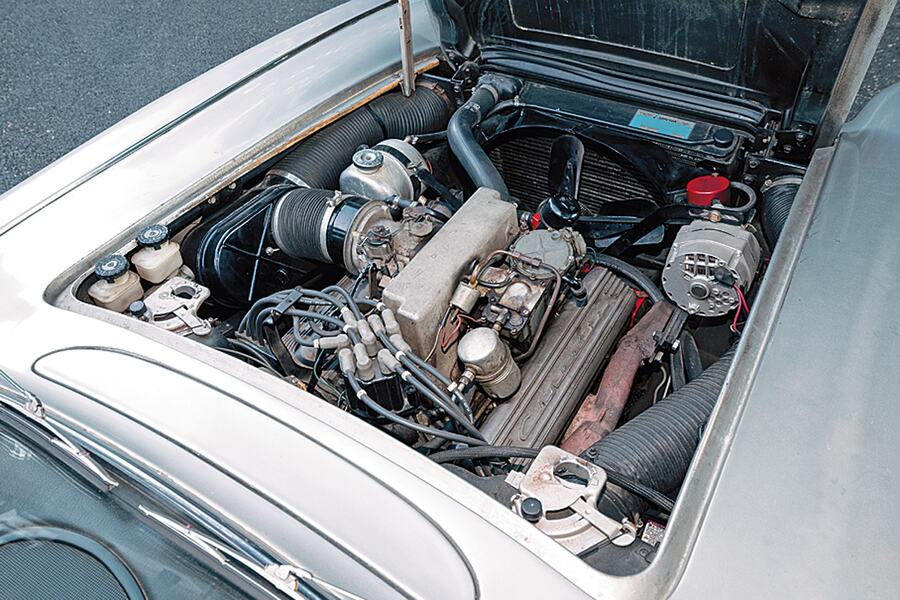
While the ’62 B-Production racer saw only limited use, Hyde continued driving his silver ’60 on a daily basis. But nine years after he and the car’s seller celebrated their 1964 deal with a whiskey toast in Oakland, the ’60’s engine was showing its age. On a visit to Hi Speed in 1973, Dominiani pointed to a never-used spare 283 sitting in a crate. Once fully built, the result was a was an 11:1 compression engine that cranked out 306 horses on the shop dyno. And while tossing the original, 100K-mile small-block might make purists cringe today, performance was Hyde’s main concern back then.
Since having the potent replacement engine installed, Hyde has added about 25,000 more miles to the car’s total. Besides simply driving it on a regular basis, he has participated in various events. “The car was my real pride and joy at the Solid Axle Corvette Club convention in Flint, Michigan, on June 30, 2003, 50 years after the first Corvettes rolled off the line,” he recalls. “Another memorable experience was an invite in 2010 to take part in the special display at Corvettes at Carlisle, celebrating the 50th Anniversary of the 1960 model year.”
Though Hyde appreciates the simplicity and visceral experience his C1 delivers, he has chosen to make a few significant upgrades. Richard Engelhard of A&R Corvette Service, who became a trusted friend and did much of the work to keep the car suited for the road, replaced the original 3.70:1 differential gears with a 3:32:1 set that offers more relaxed highway cruising. Engelhard also eliminated the car’s quick-steering adapter to reduce effort.
That effort was subsequently further reduced with the installation of an aftermarket power-steering system. “In 2018, by which time Rich was retired, [the heavy steering] was gutting my strength to the point where driving was no longer fun,” Hyde reports. “So I talked with Ray Zisa at Corvettes of Connecticut [and he recommended] an electric…setup that consists of a canister-like object mounted under the dash and out of sight.” Better still, the modification didn’t require any changes to the original steering geometry, and it eliminated the chance of fluid leaks.
Other upgrades include Wilwood disc brakes up front, connected by separate lines to a dual-reservoir master cylinder, along with an electronic ignition and an alternator in lieu of the original generator.
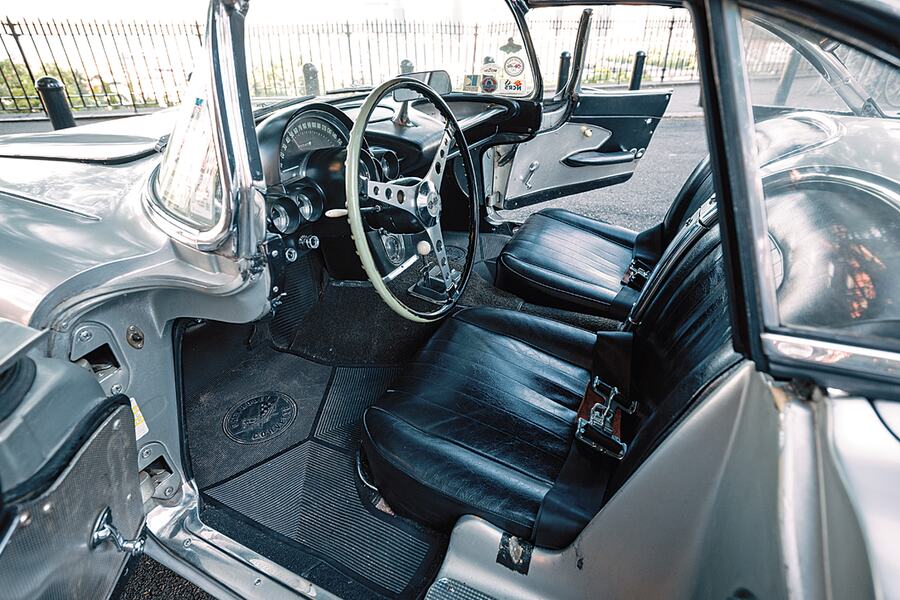
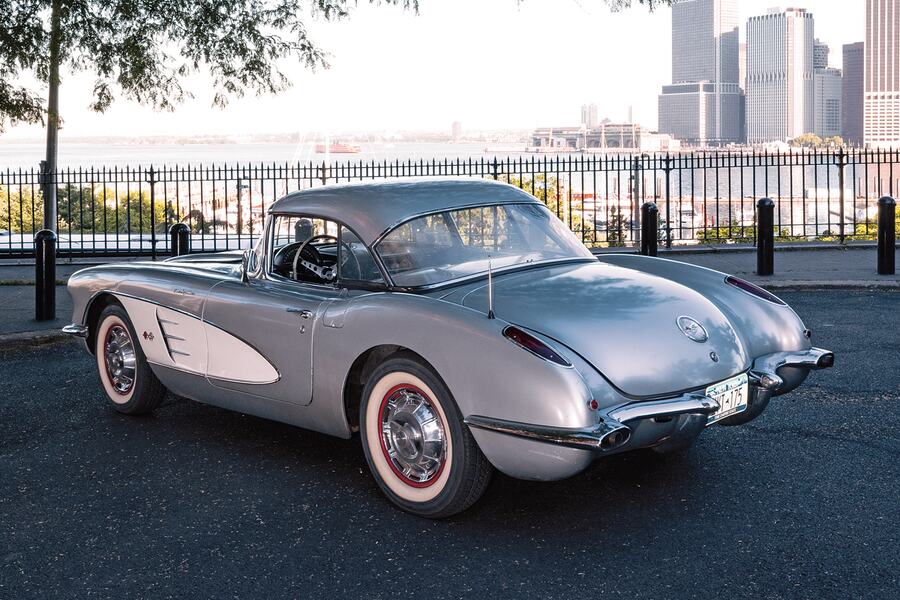
Cosmetically, the car has remained largely unchanged over the decades, with two notable exceptions. “It originally came with a blue interior, which I thought was a bit tacky,” says Hyde, “so I replaced it with a factory black interior and repainted dash.” The original, faded Sateen Silver exterior paint was also stripped, and the body repainted in a Cadillac silver offered in 1973. The original trim and chrome remain.
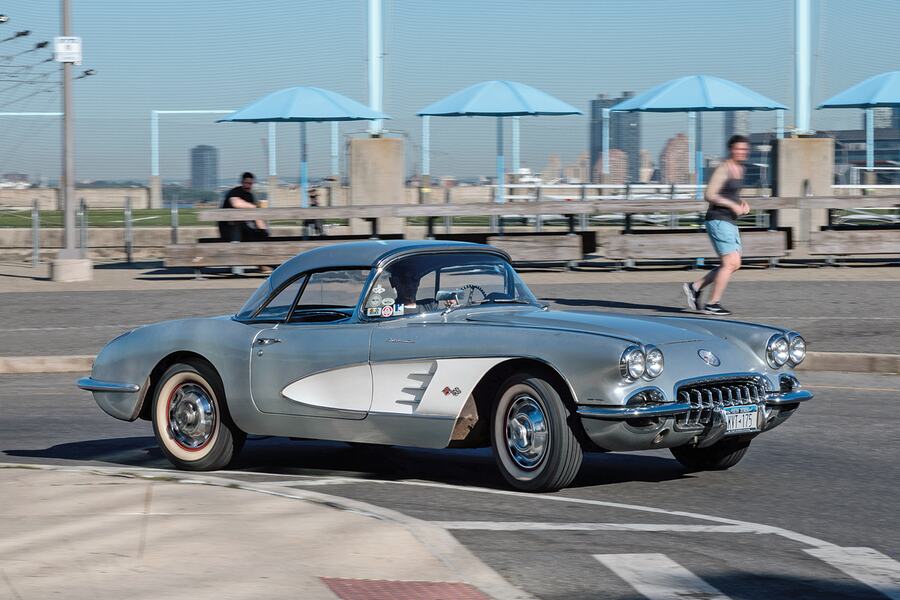
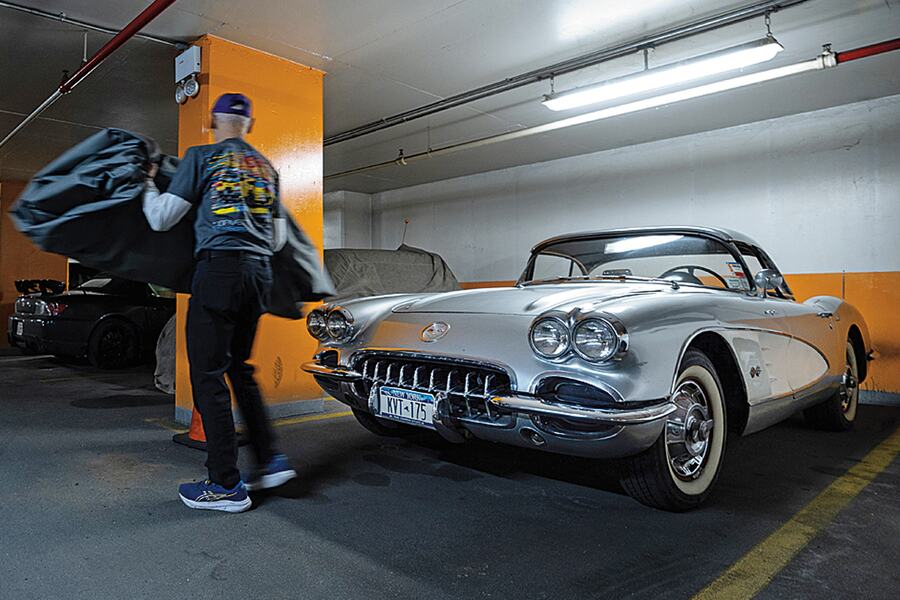
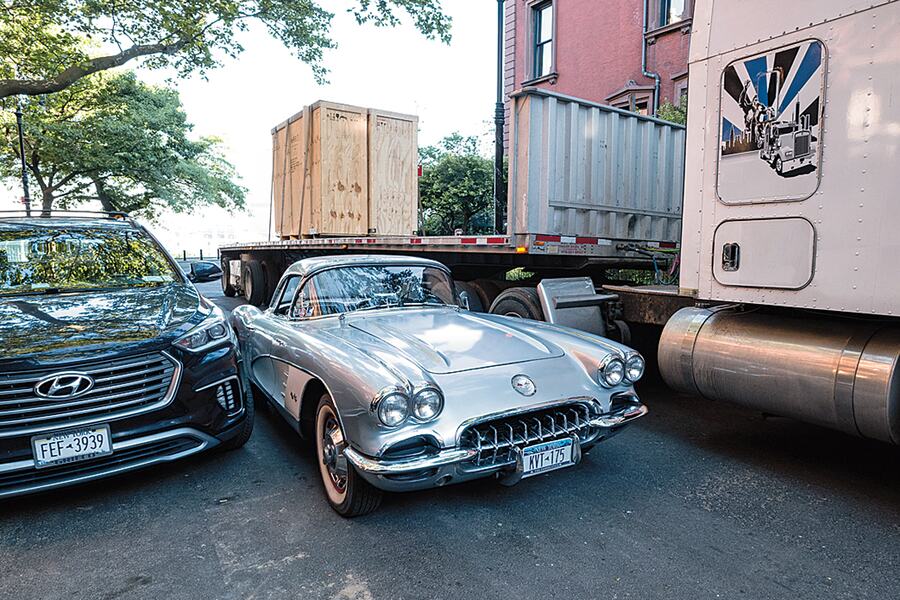
As he has done since moving to New York in 1966, Hyde lives in a borough of the city, which makes owning and operating a vintage Corvette a rather ambitious choice. While some enthusiasts would be paralyzed by the obstacles that city living can pose, Hyde remains undaunted. Neither he nor his Corvette is nearly as young as they were when they first met some 62 years ago, but both have found a way to make peace in a place where automobiles are anathema to many.
“I wouldn’t think of driving it across the country again, but I still enjoy taking it out for regular exercise, which is what it needs,” Hyde says. “There is a very special relationship between me and this car. I picked up my wife-to-be with it for our first date when we were both living in Boston; I drove her to the hospital in New York City for the arrival of our first born on June 25, 1970. We’ve had some great times with the Solid Axle Club, and with its dissolution this year, I am committed more than ever to help keep it going.” As evidence, consider that last September the car took home an unexpected award—based on its history, not its looks or originality—at the prestigious Turtle Invitational in Bedford, New York.
“Many, including me,” he continues, “consider the first-generation…Corvette to be one of the most important sports cars ever made, and even all the way back in 1960 it had everything needed to be great. It’s well balanced, suitably equipped, and beautifully styled. We’ve seen and done a lot together, and after all these years this Corvette has become an extension of myself.”