
When Bowling Green Assembly went online for Corvette production in 1981, following its conversion from a Chrysler Airtemp industrial air-conditioning plant, its C3 models looked identical to the final cars simultaneously rolling off the St. Louis line, with one significant difference: the paint.
St. Louis sprayed its cars with essentially the same single-stage lacquer that had been used for more than 20 years, but Bowling Green introduced the first basecoat/clearcoat system for the Corvette. It was a strategic prelude to the upcoming fourth-generation car, using the last couple of C3 model years to help refine and perfect the unique, two-stage application process, which promised a more durable, longer-lasting finish.
The basecoat/clearcoat process had already been developed for other vehicles with traditional steel bodywork, but the composite panels of the Corvette introduced some technical challenges. Gas blow-out in the fiberglass during the primer “bake” stage would typically generate surface defects
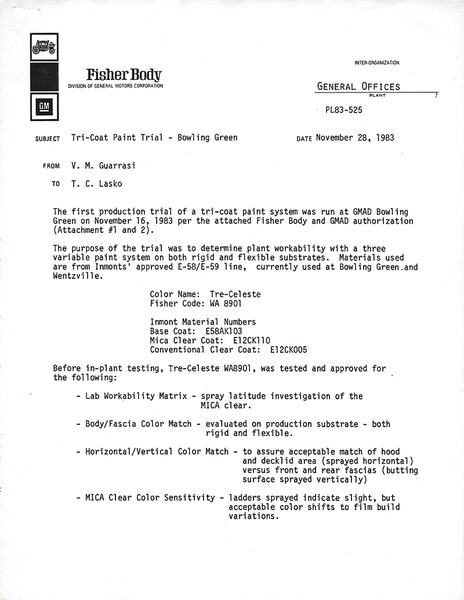
A 1983 memo from Fisher Body reports the successful application of what was initially called the “Tre-Celeste” finish.
that would be amplified with a basecoat/clearcoat finish. Body panels with higher-quality surfaces were therefore a must, but even with the panel suppliers upping their game, there were still challenges. Metallic paints helped mask the surface irregularities, but they weren’t the solution.
As the engineers continued to work, the paint-finish challenges contributed to the C4’s infamous production delay, which caused the car to miss the 1983 model year altogether. It was difficult decision, as it would have been the Corvette’s 30th anniversary, but the car and the production systems simply weren’t ready. New paint-shop processes for the C4, including the addition of a “prebake” of the body prior to primer application, helped alleviate the finish issues. With additional refinements, a palette of nine solid and metallic colors was offered when the car went on sale. Three additional two-tone combinations were also available.
With the surface-prep problem largely nailed, product planners quickly looked to leverage all that the basecoat/clearcoat system could deliver. The pigment suppliers were developing all-new color options, and GM’s paint-engineering department was pushing for more transparent shades that would create greater depth in their appearance. That included the experimentation with mica paints, which reflected different colors at different angles to produce a pearlescent effect.
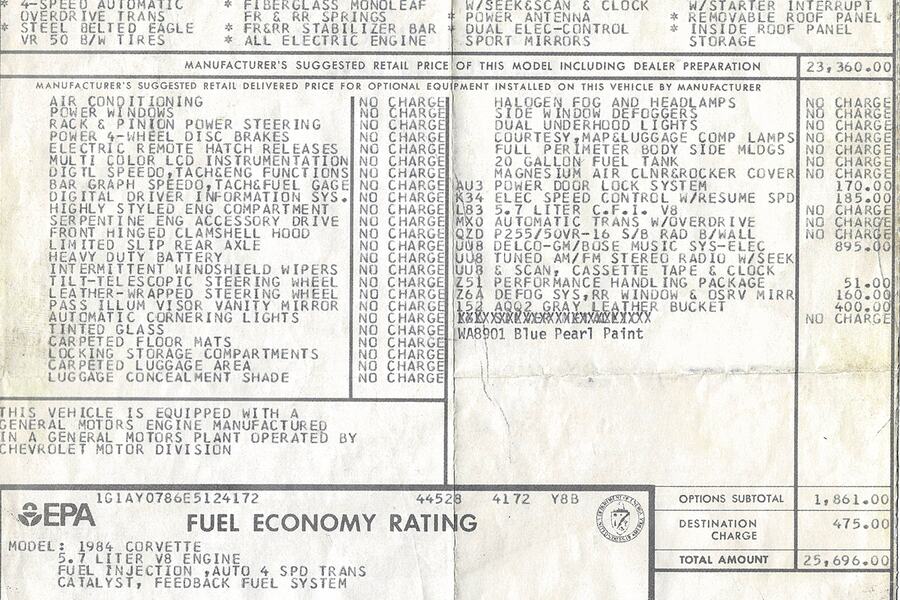
By the time this car made it to a dealership, that appellation had been discarded in favor of the more prosaic “Blue Pearl.”
Compared with a metallic paint, which derives a glittery appearance from small particles of metal (typically aluminum powder) mixed in the basecoat, micas use other minerals (usually ceramic crystals) to produce that iridescent, glowing appearance that changes hues when viewed in different light and from different angles—a prism-like effect known as “flop.” The trick with mica is that it’s not mixed with the basecoat. It’s applied between the basecoat and clearcoat stages, making it a “tri-coat” process. In fact, different colors of the mica flakes are used, too, to help give the final finish its color-changing effect.
Chevrolet began experimenting with mica paints for the C4 shortly after production started. Under the direction of Fisher Body Paint Operations, longtime automotive paint manufacturer Inmont Corporation developed an experimental color that used ground mother-of-pearl shells for the mica coat. They called it “Tre-Celeste” (Italian
for “three skies”), and its primary color appearance in daylight was light gray, with side tones of blue, red, and yellow revealed at different angles.
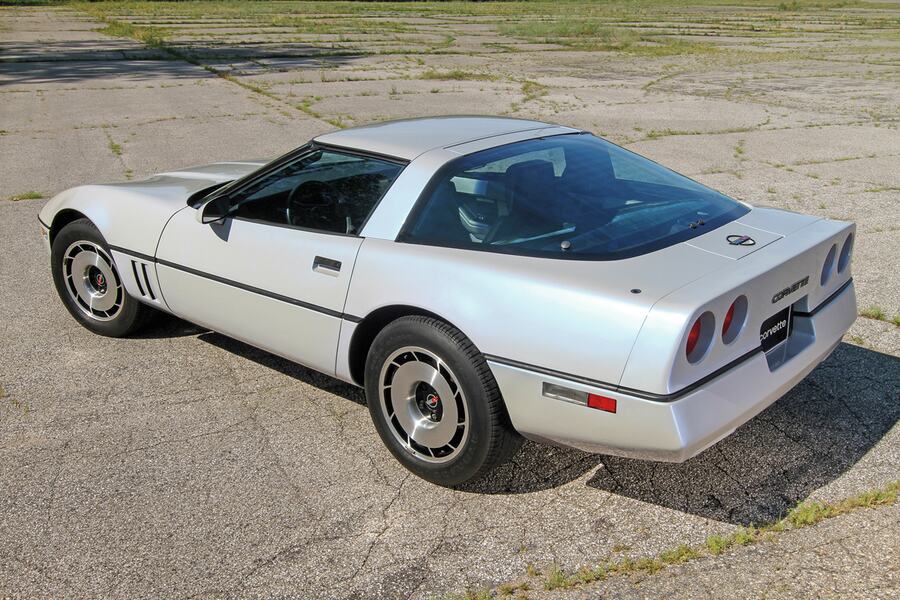
Chevrolet scheduled a production test for the paint at Bowling Green, and two Fisher Body Paint Engineering employees ordered C4s to be used for it. This meant the cars were essentially regular-production models and went through the standard dealership delivery process. An internal memo on the paint trial, however, indicated the employees waived GM’s responsibility for warranty claims on the vehicles. Each was painted on November 16, 1983, starting with a custom, off-white basecoat. The mica—known as the midcoat—was mixed in a clearcoat and sprayed next. Finally, the three-stage process included an application of the production clearcoat.
The paint trial was reportedly successful, prompting Chevrolet to aim for a 1986 introduction, which tracked with the company’s general rule of thumb of picking new colors about two years ahead of scheduled production. In fact, painting of the Tre-Celeste cars was timed for the evaluation of 1986 color proposals. In the end, Chevrolet passed on making the tri-color paint an option for Corvette. It was likely the added complexity in the paint shop and the consequential costs involved that killed the plan, but the trial’s success didn’t go unnoticed. Cadillac was sufficiently impressed, and introduced the tri-coat color White Diamond in 1989.
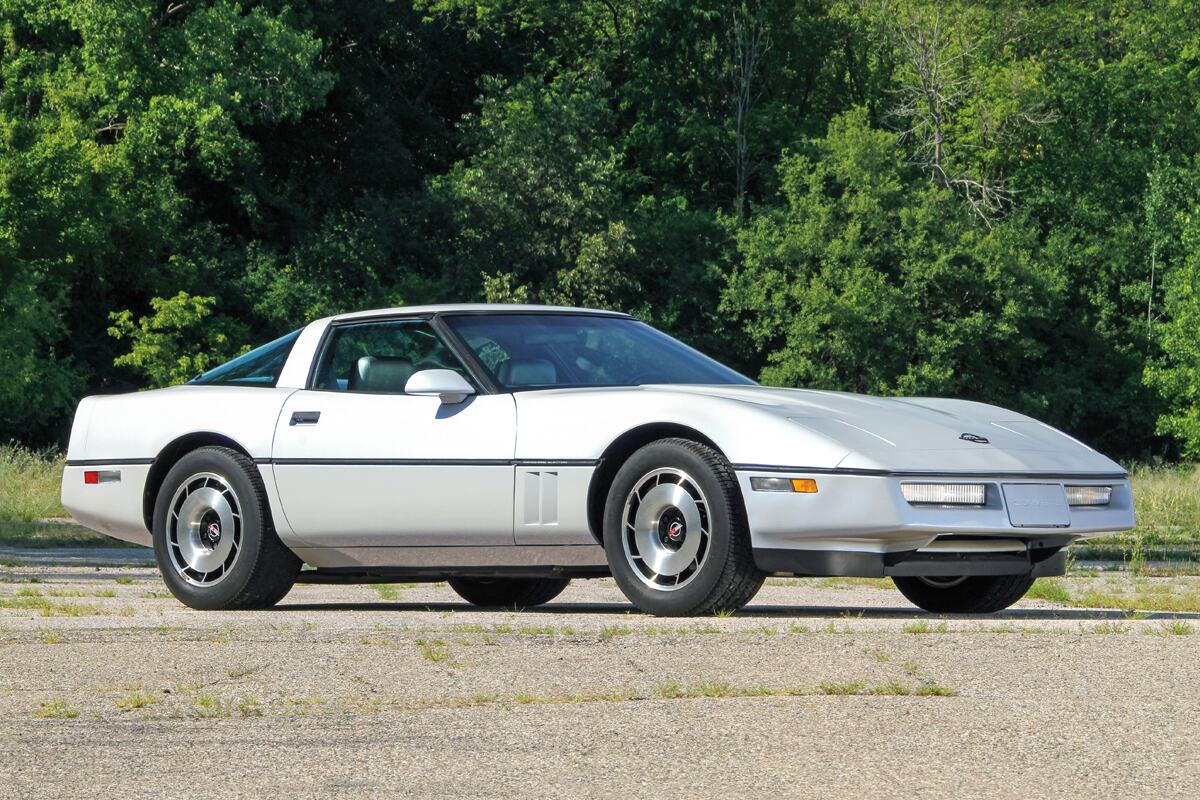
The car featured here is the first of the two ’84s painted for the trial, and it was delivered to engineer Richard Zuehlke through Buff Whelan Chevrolet, located about five miles north of GM’s sprawling technical center in Warren, Michigan (the second car was apparently delivered in Alabama). He kept the car for more than 40 years and drove it sparingly before sending it across a Mecum auction block in 2025 with the odometer showing only 12,000 original miles. That’s when C4 aficionado Nigel Fox picked it up. Fox is one of the most knowledgeable enthusiasts around when it comes to early C4s, and this one-of-two example, with its experimental paintwork, was one he couldn’t resist.
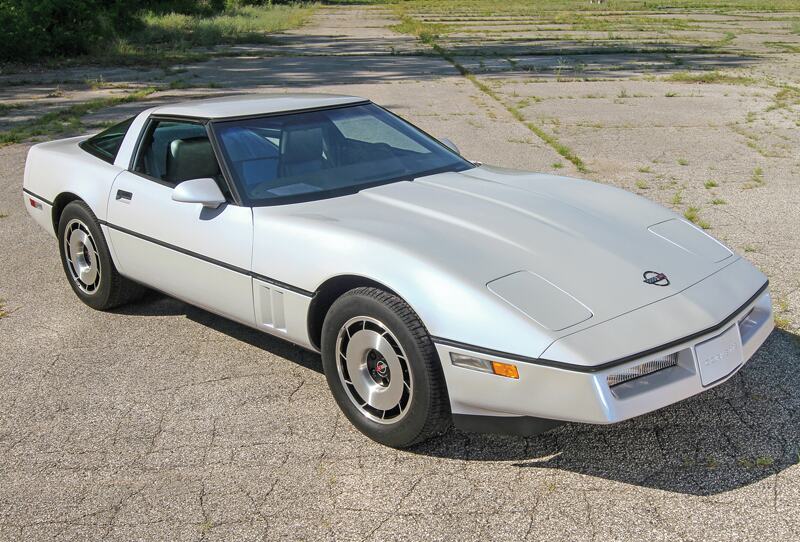
“I was a teenager when the C4 was introduced, and I’ve been enamored with them ever since,” he says. “They represented an enormous leap forward in handling, technology, and styling, and the unique history of this example as a dealer-delivered prototype made it a true piece of Corvette history.”
After more than four decades, the car’s original and blemish-free paintwork still shines and “flops” like the day the three-stage color was sprayed. It’s apparent, too, from even a casual walkaround that extra attention at the factory was paid to its preparatory work and finish.
“It truly looks like a fresh, custom paint job,” says Fox. “The finish itself is very smooth, and the overall attention to detail in the areas in between the body panels and under the hood is amazing. I’ve never seen another production ’84 like it.”
Paperwork for the car includes a copy of the window sticker, showing a typed-over deletion of the originally scheduled Silver Metallic finish and a new WA8901-code “Blue Pearl” color added as a “no charge” option. The car was also equipped with the Z51 Performance Handling Package, gray leather seats, power locks, cruise control, a Delco-Bose cassette stereo, and heated side mirrors. And with such minimal use, all those elements remain remarkably well preserved. Even the original Goodyear Eagle 255/50VR16 “Gatorback” tires remain, contributing to a real time-machine aesthetic.
Additionally, a photo of the car was used in the Winter 1984/85 issue of the GM-published owner magazine Corvette News, which featured a story about how even the shape of the fourth-generation Corvette helped dictate its very specific color palette. The article also previewed the yellow shade that would be introduced in 1986, and mentioned the evaluation being conducted for the tri-color mica paint. In fact, the color was referred to as White Diamond in the story, the name eventually adopted by Cadillac.
It may just be a footnote that the distinctive tri-coat paintwork never went into production on the C4 Corvette, but this surviving example is a reminder that not every design idea or technology made it from the drawing board to the assembly line. More than that, its survival in near-perfect condition is assuredly due to its private ownership over the years.
“That’s the real story here, I believe,” says Fox. “A car pulled off the line by Chevrolet would have likely wound up crushed or otherwise discarded, but this was someone’s personal car. That it was used for experimental purposes is something that just wouldn’t happen today—and it makes this C4 something truly unique.”